
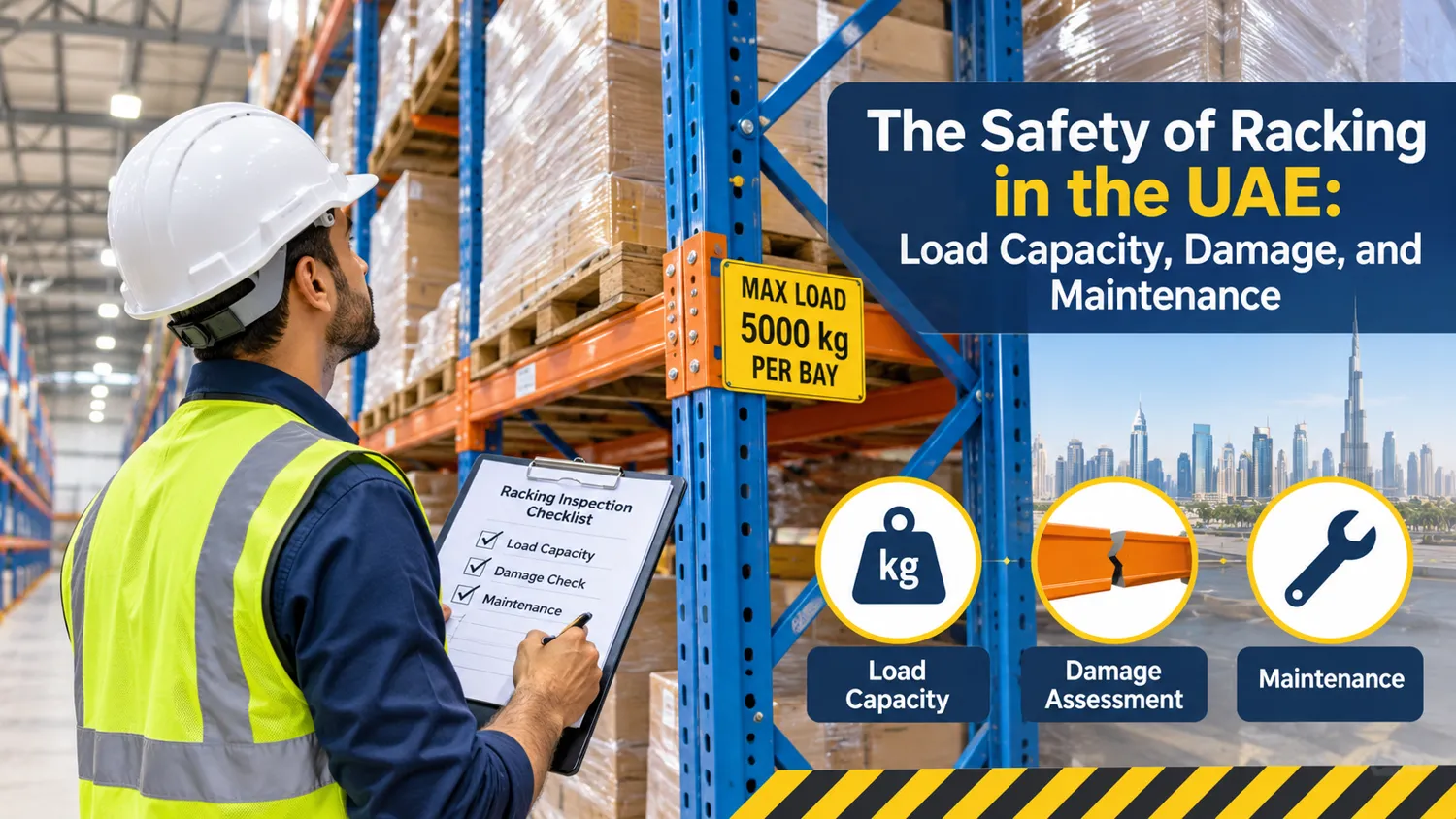
Why Safety Racking is Important for Warehouses in the UAE
We will briefly discuss the dangers of over loading, forklift damage, structural damage and lack of maintenance. Warehouse racking systems should be strong but also controlled throughout their lifespan to ensure they are using safely.
Safe racking in warehouses is a must for any business, especially those in the logistics, manufacturing, retail distribution and industrial sectors.
The role of heavy duty warehouse racking in supporting high volume storage operations.
How racking system failures can damage inventory, injure workers and cause operational downtime Impact on economy of unsuccessful storage infrastructure.
A business requires structured inspection and maintenance procedures.
Load Capacity in Heavy Duty Warehouse Racking
This article will explain how load capacities are calculated to ensure safe usage, allowing warehouse managers to understand just how important it is to choose the right racking specification and follow manufacturer guidance.
What affects the load capacity of your warehouse rack?
The load capacity of a racking system can be affected by:
- Uprights specifications
- Beam size & specifications
- Racking layout & bay layout
- Pallet weight & size
- Flooring, anchoring & quality of installation
Beam Capacity vs Bay Capacity
- Beam capacity – the maximum weight that can be loaded onto a beam (or a set of beams) as defined by the manufacturer.
- Bay capacity – the maximum weight that can be loaded into a rack bay, taking into consideration the approved configuration.
How to Prevent Overloading Heavy Duty Racking
Ensure that:
- Load limits of racking have been followed.
- Load signage is clear.
- Pallets loaded correctly.
- Incorrect / over heavy loads not placed on top tiers.
- Pallets the correct size and condition for the rack.
Technical approvals have been obtained for any changes to rack configuration.
Typical Damage to Heavy Duty Warehouse Racking
Here we will look at the typical damage found to Heavy Duty Racking.
- Uprights: Impacts to the forklifts Bent posts. Twisted uprights. Damaged bracing (horizontal / diagonal). Damage to the upright can effect the structure.
- Beams and Connector: Bent Beams. Damaged Beam Connectors, Lost Lock Pins, Unsecured connections. Damaged connections can cause issues with load distribution and strength.
- Base Plates and Floor Anchor: Base plates and floor anchors are a vital part of the racking system. Here we will look at loose/missing anchor bolts, cracked base plates and corrosion.
- Corrosion / Degradation: Corrosion, damaged coatings, degradation from exposure to environment, cleaning products and warehouse conditions.
How to Conduct Inspections on Heavy Duty Warehouse Racking
There are various considerations to take into account when inspecting your storage racking.
Visual Checks
Regular visual inspections by warehouse staff and management should include;
- No visible distortion, cracks or deformation
- Locks in place and beams attached
- No damage from forklift
- Anchorages are tight and undamaged
- No misplaced or unstable pallets
- Overloaded signs
Professional Racking Inspection
Qualified racking inspectors will check;
- For any misalignment and uprights
- Beams and attachments
- Bracing and anchorages
- For any visible deformation and amount of damage
- If racks are correct for the approved rack design.
- Inspection Findings, Risk Category and Recommendations
Regular visual inspections should be conducted by trained warehouse staff.
Periodically by experts to ensure compliance with relevant standards and manufacturers guidelines.
Additional inspections if there have been any collisions, changes or anything out of the ordinary.
Heavy Duty Warehouse Racking Maintenance: Best Practice
Preventative maintenance will help increase the life span of your industrial storage systems.
1.Damaged Components
If there are any damaged structural components it is important to evaluate them and replace them with suitable manufacturer approved parts. Do not attempt to repair components with temporary fixes, bend and twist them back into place or make any unauthorised changes.
2.Reduce Forklift Damage
There are several things that can be done to reduce the likelihood of damage to racking:
- Train forklift drivers
- Ensure adequate aisle width
- Ensure correct upright protectors are used at the end of aisles
- Establish safe loading and unloading procedures
- Ensuring good visibility around the racking aisles.
3.Logs
It is important to record:
- The date of inspections
- Any damage found
- Repairs and replacement of components
- Actions required
- Changes made to racking setups and load specifications
In the event that any damage takes place:
- Spot and ban usage of rack
- Isolate the scene
- Avoid using the racks when loading them
- Make sure a qualified technician has conducted the required inspection
- In some cases, dismantle the appropriate part of the rack
- Make sure the damaged parts were repaired by following the appropriate procedures.
Choosing the Appropriate Heavy-Duty Warehouse Racking Safety in UAE for the long term.
Racking safety should begin with the selection process. The informational material for prospective customers must include the explanation of how the correct system can eliminate the risk of unnecessary operations and assist in warehouse management.
Include in the work:
- Rack specifications should match the weight and dimensions of the pallets.
- It should be taken into consideration what storage the company is going to use and how many different types of loads it is going to process.
- Proper beam and upright configurations must be selected.
- The ground of the warehouse should be checked and the installation requirements determined.
- The equipment used and the width of the aisles should also be considered.
- Work only with an experienced supplier.
- It is important to mention that the system which has more power is not always the safest.
Conclusion
Adhering to limits on load weight;
Early spotting of structural damage;
Performing constant checking of the storage system;
Properly fixing and replacing faulty parts;
Using heavy-duty warehouse racking, fit for the storage work.
Finally, always remember that effective storage at your warehouse provided only through a proper design of your racking system, serious day-by-day operations, and regular maintenance.