

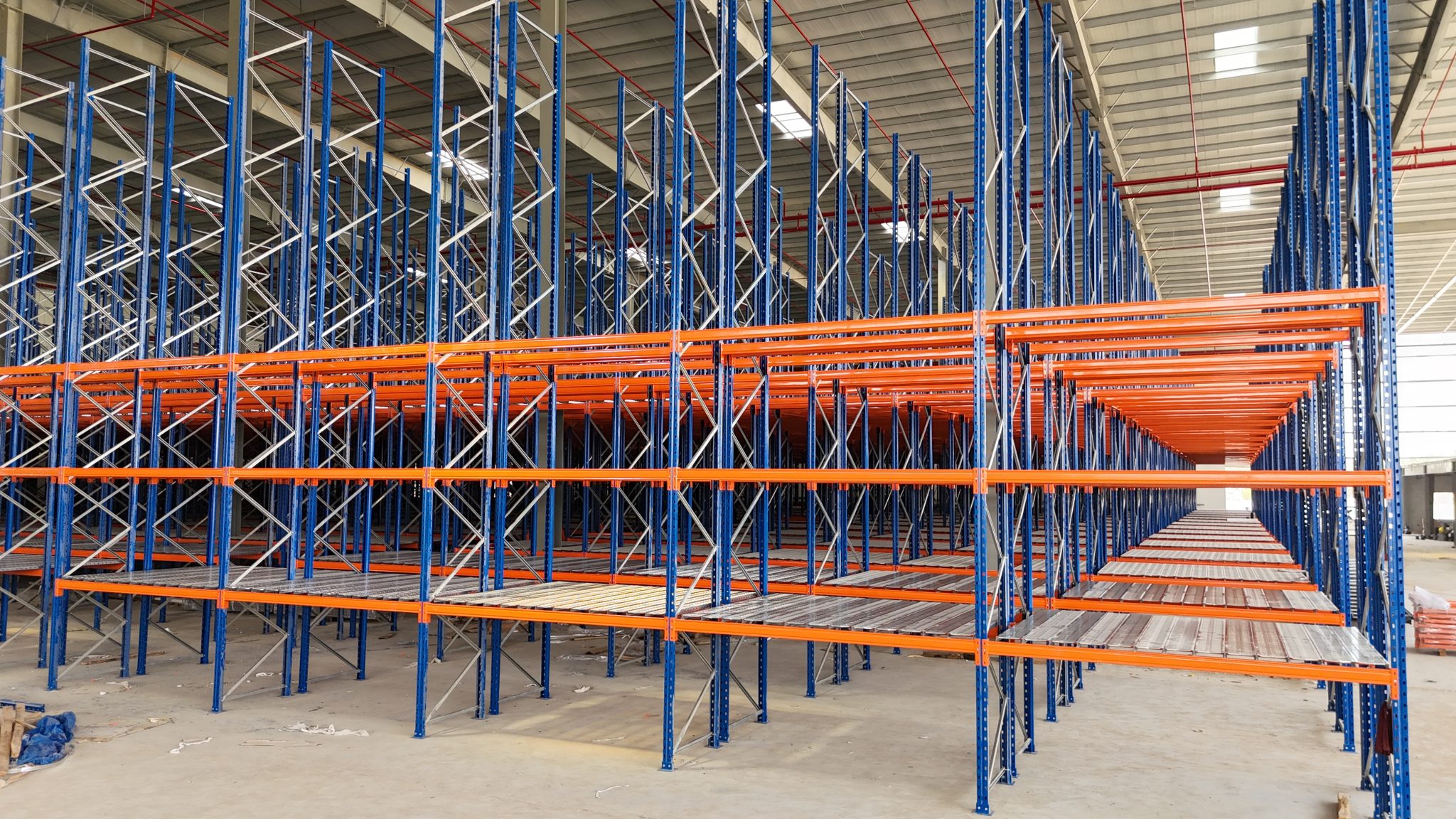
Maximizing warehouse storage efficiency is crucial for businesses to optimize their operations and minimize costs. Below are practical tips to increase warehouse storage efficiency, based on warehouse racking practices in Dubai.
Implement an Effective Warehouse Layout
Designing an effective warehouse layout plays a crucial role in maximizing storage efficiency. Below are key considerations, taking examples from leading racking suppliers in the UAE.
Analyze Space Requirements
Begin by assessing the available warehouse space and understanding your storage needs. Consider factors such as the size and volume of your inventory, the types of products (bulk, pallets, small items), and any specialized storage requirements (temperature-controlled, hazardous materials).
Determine Storage Zones
Divide your warehouse into functional zones based on the nature of your operations. Common zones include receiving, storage, picking, packing, and shipping areas. Ensure clear pathways and sufficient space for movement between these zones.
Optimize Flow
Plan the flow of goods within the warehouse to minimize travel distances and streamline operations. A logical flow typically involves receiving at one end, with products moving through storage, picking, packing, and shipping areas sequentially. Minimize bottlenecks and optimize workflow to enhance efficiency.
Consider Accessibility
Place frequently picked items closer to packing and shipping areas to reduce travel time. High-demand products should be easily accessible. Reserve prime locations for fast-moving SKUs.
Use Vertical Space
Utilize vertical space by installing tall storage systems such as pallet racking or mezzanines. Vertical storage improves space utilization while keeping products accessible. Consider weight capacity, safety regulations, and proper handling equipment.
Implement Slotting Strategy
Apply a slotting strategy based on product characteristics, demand, and picking frequency. Group similar products together and consider size, weight, and turnover rate when assigning storage locations.
Safety Considerations
Ensure compliance with safety regulations by clearly marking walkways, using safety barriers, and installing proper lighting. Keep safety equipment such as fire extinguishers and first-aid kits easily accessible.
Embrace Technology
Implement warehouse management systems (WMS) and automated solutions to optimize efficiency. WMS helps track inventory, manage picking routes, and provide real-time data. Technologies like barcode scanners, RFID, and AS/RS enhance accuracy.
Flexibility and Scalability
Design the layout to accommodate future growth. Use modular storage systems that can be easily reconfigured or expanded as business needs evolve.
Continuous Improvement
Regularly review and optimize the warehouse layout by analyzing operational data and gathering staff feedback.
Utilize Vertical Space
Using vertical space effectively is essential for maximizing warehouse storage efficiency.
1. Install Tall Storage Systems
Invest in pallet racking systems that allow vertical stacking. Choose adjustable, sturdy racking suitable for your inventory weight and size.
2. Consider Mezzanine Floors
Mezzanine floors create additional storage or workspace without expanding the warehouse footprint. Ideal for lightweight storage and picking areas.
3. Utilize Vertical Carousels or Lift Modules
These automated systems store items vertically and retrieve them efficiently. Suitable for small, high-demand items.
4. Implement Vertical Conveyors
Vertical conveyors transport goods between levels, saving time and reducing manual handling.
5. Use Stackable Containers or Bins
Stackable bins improve organization and maximize vertical storage for small items.
6. Implement Cantilever Racks
Designed for long and bulky items such as pipes, lumber, or steel bars.
7. Consider Push-Back Racking
Push-back systems maximize storage density using inclined rails and support LIFO inventory flow.
8. Ensure Safety and Accessibility
Use appropriate handling equipment and ensure staff training for working at heights.
9. Optimize Inventory Placement
Place fast-moving items on lower levels and slow-moving items higher.
10. Regular Maintenance and Inspections
Conduct routine inspections to identify damage or safety hazards.
Implement Cross-Docking
Implementing cross-docking streamlines operations and reduces storage needs.
1. Assess Product Eligibility
Identify fast-moving and pre-packaged items suitable for cross-docking.
2. Plan Receiving and Shipping Areas
Design receiving and dispatch zones close to each other for faster transfers.
3. Collaborate with Suppliers and Carriers
Align delivery schedules to support immediate outbound movement.
4. Streamline Documentation and Labeling
Use EDI, barcoding, or RFID for accurate tracking and reduced paperwork.
5. Plan Workforce and Equipment
Assign trained staff and appropriate equipment such as forklifts and conveyors.
6. Prioritize Sorting and Consolidation
Sort items immediately by destination and consolidate similar shipments.
7. Minimize Handling Time
Focus on fast movement from receiving to shipping.
8. Utilize Technology and Automation
Use WMS and TMS for real-time visibility and optimized routing.
9. Continuous Monitoring and Improvement
Track KPIs such as dock-to-stock time and shipment accuracy.
10. Collaborate with Stakeholders
Maintain open communication with suppliers, carriers, and internal teams.
Use FIFO and LIFO Principles
FIFO (First-In, First-Out)
Rotate older stock first
Label items clearly with arrival dates
Store new stock behind older stock
LIFO (Last-In, First-Out)
Place newest stock in accessible locations
Monitor inventory aging regularly
Hybrid Approach
Apply FIFO or LIFO based on product type, demand patterns, and customer requirements.
Optimize Slotting
Optimizing slotting improves picking efficiency and space utilization.
Key Steps
Analyze inventory characteristics
Classify products using ABC analysis
Determine picking frequency
Optimize aisle widths
Slotting Techniques
Cubic space utilization
Zone picking
Cross-docking zones
Golden zone slotting
Product family grouping
Technology Support
Use WMS tools to automate slotting decisions and provide real-time insights.
Continuous Review
Monitor KPIs and adjust slotting based on changing demands.
Train Warehouse Staff
Effective staff training ensures safety, efficiency, and accuracy.
Training Areas
Orientation and onboarding
Safety and PPE
Equipment operation
Inventory management
Workflow execution
Continuous improvement
Communication and collaboration
Cross-training
Ongoing development
Regularly Review and Improve Warehouse Operations
Performance Metrics
Track KPIs such as order accuracy, inventory accuracy, and on-time delivery.
Data Analysis
Use WMS and analytics tools to identify inefficiencies.
Continuous Improvement Culture
Encourage employee participation and feedback.
Process Mapping and Streamlining
Identify waste, bottlenecks, and redundant steps.
Technology Integration
Assess and upgrade WMS, automation, and emerging technologies.
Collaboration and Feedback
Work closely with suppliers, partners, and customers.
Lean and Six Sigma
Apply 5S and Six Sigma principles to reduce waste and defects.
Use Optimal Storage Systems
Pallet Racking Systems
Selective racking
Double deep racking
Drive-in / drive-through racking
Push-back racking
Shelving Systems
Adjustable shelving
Mobile shelving
Carton flow shelving
Mezzanine Systems
Maximize vertical height for additional storage or workspace.
Automated Storage Systems
Vertical lift modules
Vertical carousels
AGVs
Compact Storage Systems
Mobile racking
Vertical carousels
Cantilever Racking
Ideal for long and bulky materials.
Flow Racking Systems
Gravity flow racks
Pallet flow racks
Employ an Inventory Management System
Real-time inventory tracking
Demand forecasting
Order management
Replenishment planning
Barcode and RFID integration
Lot and serial tracking
Reporting and analytics
System integration
Mobile accessibility
Adopt ABC Analysis
Category A
High-value items requiring strict control.
Category B
Moderate-value items with balanced control.
Category C
Low-value items with simplified control.
Regularly review classifications to reflect demand changes.
About AME Storage Solutions
AME Storage Solutions is your trusted partner for storage solutions in the UAE. We offer a wide range of high-quality warehouse racking and shelving systems, including pallet racking, mezzanine systems, and shelving units.
Our expert team delivers customized storage solutions tailored to your requirements, helping businesses maximize space utilization, streamline operations, and improve productivity.
Trust AME Storage Solutions for efficient, reliable, and scalable racking and shelving solutions in the UAE.